
Specialties
Bruxism and TMJ
This joint is closely related to dental occlusion and the neuromuscular system, making possible the functions of chewing, swallowing, and phonation.
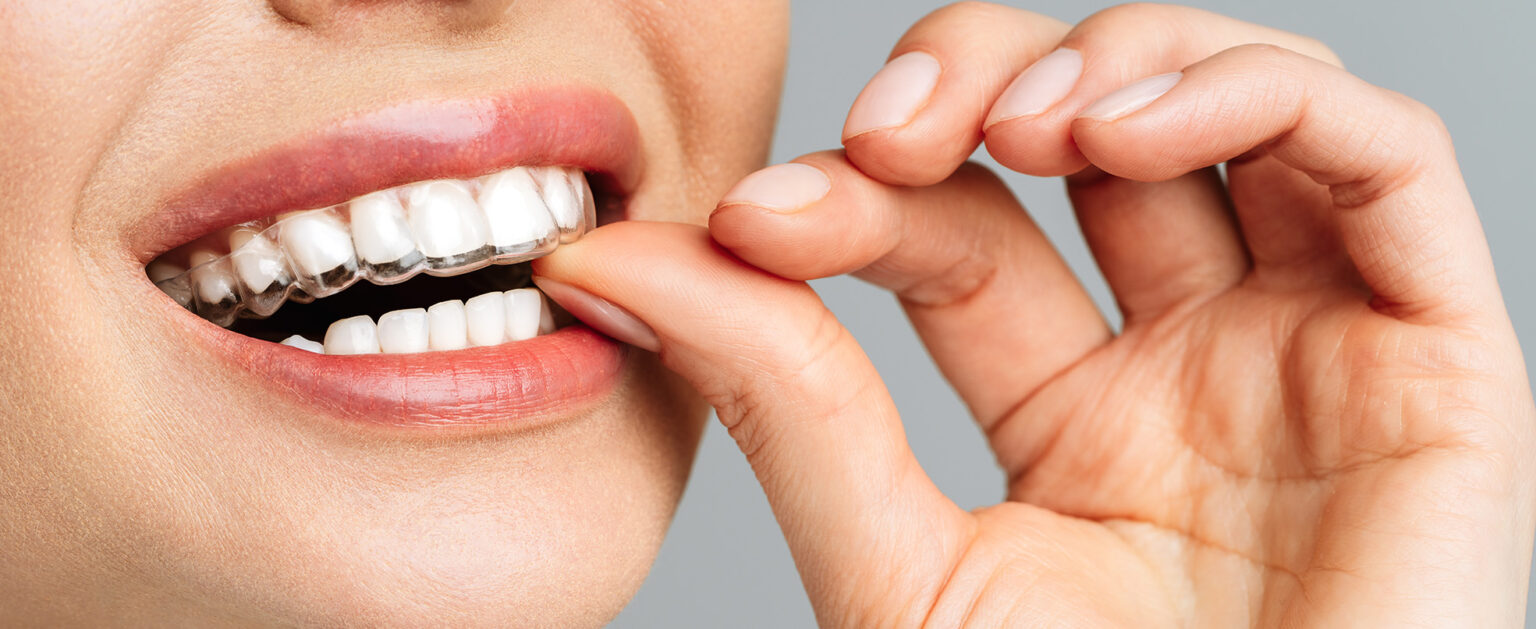
The role of bruxism in TMJ disorders
Some patients clench their teeth at night, usually when entering deep sleep and when coming out of it, but also during some moments of stress or maximum concentration during the day.
By clenching the teeth either in maximum closure position or in extreme lateral movements (parafunctional movements) can cause:
- Dental wear: Depending on the type of clenching, wear of the vertical dimension of teeth, cracks and/or fissures, gingival recession (the so-called V-shaped lesions) and even dental fractures may occur.
- Muscle hypersensitivity: The perioral muscles such as the masseters (from the cheek area to the hearing area), cervical and neck muscles and back (such as the sternocleidomastoid and trapezius) can become very painful, and so-called "trigger points" may appear, which are points in the compromised muscle that are extremely painful to palpation.
- Articular disc alterations: The fact that by clenching the teeth and performing parafunctional movements the articular disc is excessively compressed can cause this thin cartilage to "slip" when opening the mouth, producing a noise similar to a click, often audible to people next to the patient. In early stages, the cartilage "recovers" when closing the mouth, and another click sound is heard; but in very severe stages, the disc may not recover, in which case a TMJ dislocation would occur and it would remain open until its subsequent manual closure.
This joint affectation can occur unilaterally or bilaterally, possibly causing subluxations and dislocations unilaterally or bilaterally.
When arthritis evolves into arthrosis...
When arthritis is not treated, it can evolve in the long term into arthrosis, in which case the bony surfaces of the temporal bone and mandibular condyle wear down by friction between them without the necessary disc covering, so the noise becomes audible like a crepitation.
How to treat Arthritis so it doesn't evolve into Arthrosis...
When the patient comes to our clinic with a joint problem, we must address several aspects:
- Detect occlusion problems due to malpositions or tooth loss: Most patients with TMJ disorders have suffered variations in dental contacts that impacted joint stability.
- Protect the joint: Once occlusion (dental contacts) is corrected, the joint must be stabilized and protected with a device called a night guard. To make this plate or guard, it will only be necessary to take impressions and some bite registrations of the patient's occlusal contacts, and we will have all the necessary information.
In a next visit, we will adjust the night guard in the patient's mouth to ensure that the correct intermaxillary relationship is established.
Sometimes treatment by a physiotherapist and/or an osteopath will be necessary for complete recovery from the joint disorder.
The function of the night guard is...
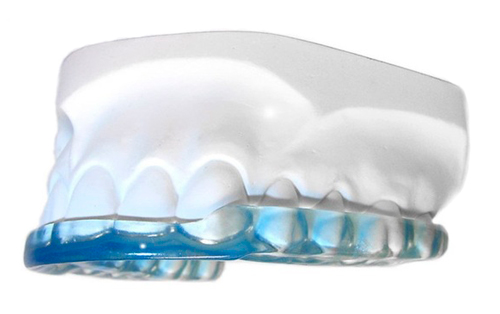
- Avoid dental wear: the fact of interposing a rigid resin plate between the upper and lower arch will prevent the teeth from contacting each other and therefore they will not wear down.
It is especially important that the guard is made with rigid resin, as it has been scientifically proven that forces "are absorbed" by the rigid resin and are not transmitted to the teeth. In contrast, guards made of rubber (such as mouthguards for sports) cushion an impact but do not absorb the force, so they can transmit this force and generate dental cracks.
- Stabilize the articular disc: The night guard has a thickness of about 3-5 mm, which will allow the articular disc to have the necessary space to remain suspended in the synovial fluid and can recover, resulting in cases that are not very severe in long-term regeneration that will even make the joint clicks so uncomfortable for the patient disappear.
- Relax the involved muscles: Muscle pains will disappear after being treated, sometimes with the help of a physiotherapist, since by being distended throughout the night with the use of the guard, in the morning it will be "rested".

We pride ourselves on our meticulous craftsmanship and attention to detail, our friendly family atmosphere, a standard of cleanliness with no compromises and an elite level of modern techniques and equipment that allow our patients a sophisticated level of comfort and confidence.
A new dental experience for the province of Pontevedra!.
Baiona Clinic
Rúa Ramón y Cajal 9 - 1 A,Baiona (Pontevedra)
O Rosal Clinic
Rúa Xulio Sesto baixo 15O Rosal (Pontevedra)
+34 986 35 72 58
+34 689 365 259
dentalbaigorria@gmail.com
© MMXXIV - Dental Baigorria Clinic - All rights reserved | Terms and Conditions of Use